Routine eye exams are straightforward, quick and painless. Most doctors recommend screening your vision on an annual basis to ensure your vision prescription is up to date (or to determine you need one) and to make sure your eyes are healthy. Regular eye exams are the first line of defense against eye disorders, such as chronic dry eye, inflammation, glaucoma, age-related issues and cataracts.
During a regular visit, you can expect your optometrist to perform the following tests to determine your eye health:
Pre-Exam Tests. A technician will often perform a few basic tests before you see the doctor, including a color sensitivity test, peripheral vision test, a glaucoma (or “air puff” test) and a cover test to determine how well your eyes work together. He or she may also use an autorefractor, which automatically measures your vision prescription, to gain a ballpark understanding of your vision needs.
Pupillary Reactions. Using a light, the doctor checks your pupils’ responsiveness. Your pupils’ response to light is a natural function of the eye and is critical to your vision. While using the light, the doctor will also look at the surface of your eye for signs of dry eye, corneal scratches and bacterial debris.
Slit Lamp Test. During a slit light test (also called a biomicroscope), the doctor will shine a vertical bar of light into your eye to magnify your eye’s surface and inspect for abnormalities on the cornea, iris and lens. This test usually takes a few minutes, and you may be asked to blink or stare at your doctor’s ear so he can look closely at your eye’s surface.
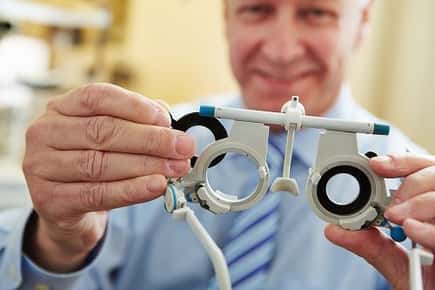
Visual Acuity and Refraction. The most well-known part of the eye exam is the visual acuity test. Your doctor will ask you to read an eye chart filled with numbers and letters with one or both eyes. Your ability to clearly read and identify the numbers and letters helps the doctor further determine your vision prescription needs. To hone in on your exact prescription, your doctor will place a large lens refractor in front of you and ask you a series of questions about which lenses make your vision better or worse.
Pupil Dilation. At the end of your exam, the doctor may ask you if you would like to have your eyes dilated. By dilating your eyes, the doctor can examine your retina and optic nerve more fully. To perform this part of the exam, the doctor will put a few drops in your eyes that cause your pupils to enlarge, letting more light in and giving him or her a better view into your eye. Your eyes may be sensitive to light for up to an hour after the test, so it’s best to avoid being outside in direct sunlight afterward.