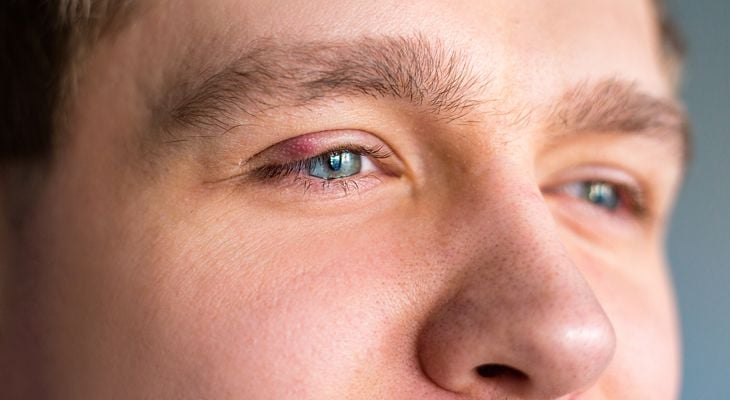
A stye, sometimes spelled as "sty," is a red, painful bump near the edge of the eyelid. It may look like a pimple or abscess, and it can form on the inside or outside of the eyelid. A stye is actually a localized infection that usually disappears by itself after a few days, although in rare cases, a stye can lead to a serious infection called cellulitis. If your stye has not resolved on its own after a couple days, contact your eye care provider for a full evaluation.
Causes of Styes
A stye often results from a combination of a clogged oil gland and overabundant bacteria. These bacteria live naturally on the surface of the skin without causing harm, but they can grow out of control if the conditions become just right. For instance, poor hygiene can transfer bacteria to your eyelids, and chronic inflammation can cause irritation and encourage bacteria to multiply.
Risk Factors for Styes
Certain behaviors can increase your risk of developing a stye:
- Inserting or removing contact lenses without first washing your hands
- Forgetting to disinfect contact lenses before putting them in
- Leaving on eye makeup overnight
- Using old or expired cosmetics, such as mascara that is more than three months old
Diagnosis and Treatment
Eye doctors usually diagnose styes by looking at your eyelid. He or she may use a magnifying device and light for a more thorough examination.
In most cases, a stye does not need any specific treatment; it will go away by itself. If you feel pain or discomfort, gently apply a warm washcloth to your eyelid. However, if the stye persists, then your doctor may prescribe antibiotics. A stye that is filled with pus may be drained surgically to relieve pressure and pain.